MoniterLGGAMING
The First Native 1000Hz Gaming Monitor: Why LG’s New 1080p Update Changes Everything
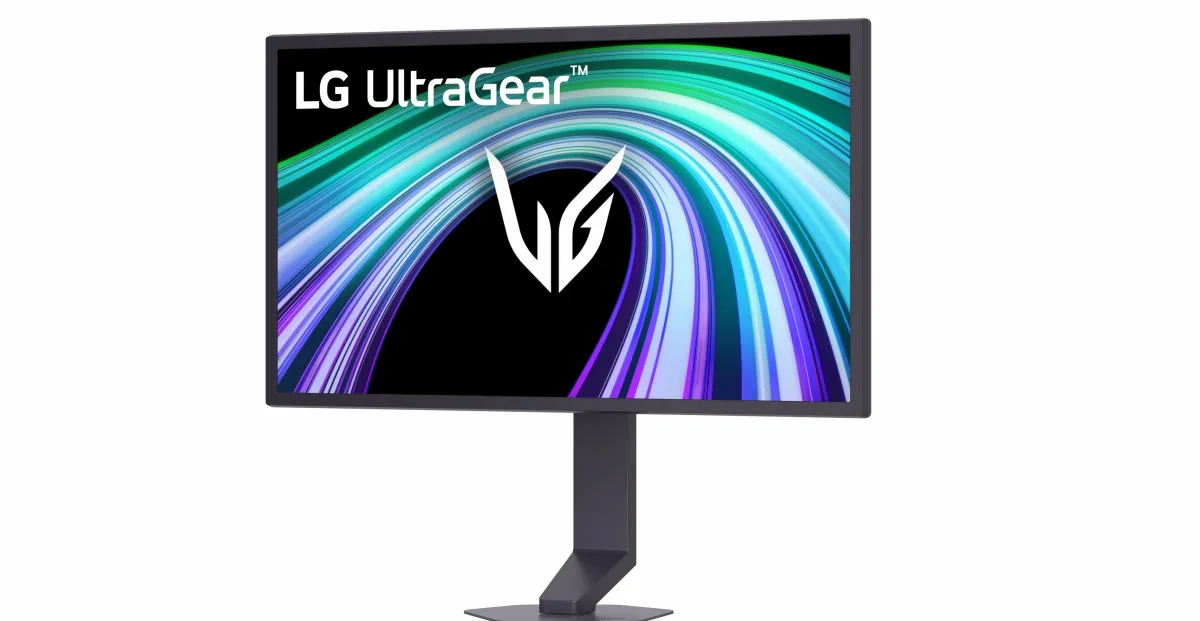
- First of its kind: The LG 25G590B is the first 1000Hz gaming monitor ever released with a native 1080p resolution.
- Target Audience: Built specifically for competitive esports players who prioritize response time over pixel density.
- Key Features: 24.5-inch IPS panel, integrated headset hook, AI Scene Optimization, and "minimalist" design.
- Release Window: Currently scheduled for the "second half of 2026" with undisclosed pricing.
🎯 Introduction
The gaming display market is finally hitting a ceiling, and LG is the first company to vault over it with the new UltraGear 25G590B. This is the first 1000Hz gaming monitor to hit the shelves with a resolution of 1920x1080, solving the resolution dilemma that previous high-refresh-rate models struggled with. For developers and enthusiasts wondering how this affects the competitive landscape, LG has announced that the 25G590B creates an "ideal platform" for esports competitors. Whether you are playing tactical shooters or managing spreadsheets—yes, really—this monitor aims to maximize responsiveness.
🧠 Core Explanation
While we recently marveled at 360Hz and 480Hz panels, the human eye and game input lags have pushed manufacturers to chase higher numbers. The 25G590B is a significant leap forward in refresh rate technology. Unlike previous attempts at breaking the 1000Hz barrier, which were stuck in 720p territory, this LG monitor maintains high fidelity.
Here is the technical breakdown of why this matters:
- Input Lag Reduction: Each millisecond counts. Moving from 360Hz to 1000Hz theoretically reduces the timespan for a single screen refresh by nearly 70%.
- Panel Technology: It utilizes a 24.5-inch IPS screen. While IPS usually trades some contrast for color accuracy and viewing angles, at 1080p this is actually a sweet spot for desktop real estate.
- Signal Integrity: Achieving 1000Hz requires a T-Con driver capable of handling massive data throughput, likely pushing the limits of current DisplayPort / HDMI standards.
🔥 Contrarian Insight
"1000Hz is marketing fluff for 80% of users. The real engineering breakthrough here isn't the Hz, it's the transition from 720p to 1080p at that speed."
I have been watching this market for years. When high refresh rates first hit 240Hz, it felt transformative. By 360Hz, the curve flattened significantly. We are standing at the edge of a cliff again with 1000Hz. This monitor is essentially a laboratory experiment in signal processing for developers. If LG loses any pixels in the transfer, you won't see ghosting; you simply won't care because the game is moving too fast. This isn't a monitor for everyone; it is a niche tool for the absolute edge of human reaction speed.
🔍 Deep Dive / Details
Technical Specs & Architecture
To achieve 1000Hz gaming monitor status, LG has not just cranked up the clock speed. They are likely utilizing advanced overdrive techniques and specialized processing chips.
The "AI" in the Monitor: LG states the 25G590B incorporates "on-device gaming AI." Here is how that looks on the spectrometer:
- AI Scene Optimization: Dynamically adjusts gamma curves based on real-time game telemetry.
- AI Sound: Uses spatial audio drivers to separate footstep sounds from ambient noise—a critical feature for FPS developers.
Real-World Implications
If you want to use this, your PC hardware needs to be ready. To justify a 1000Hz panel, you need to be rendering 500+ FPS at 1080p. If you are stuck at 150 FPS, you are wasting performance budgeting money on the panel. Stand functionality includes a minimalist design and integrated hooks for headset storage, simplifying the cable management for esports rigs.
⚔️ Comparison: The "If-You-Only-Knew" Table
Most gamers don't realize how small the market is for high-Hz monitors at high resolutions.
| Feature | LG 25G590B | Previous "Standard" High Refresh (180Hz-240Hz) | 1000Hz Alternatives (Future/Unreleased) |
|---|---|---|---|
| Resolution | 1080p Native | 1080p - 1440p | Often 720p or leaked prototypes |
| Refresh Rate | 1000Hz | 240Hz | 1000Hz+ |
| Primary Use | Esports (CS, Valorant) | General AAA Gaming / Mixed | Theoretical Esports |
| Price Point | TBD (2026) | Entry-to-Elite | Likely Prosumer/High |
🧑💻 Practical Value
Who should actually buy this?
You are not the average BitAI reader if you want this monitor. This purchase decision happens only if you fall into the "Pro League" tier:
- You play competitive shooters (CS:GO, Valorant, Overwatch 2) and notice input lag.
- You need to move from a mouse at 50ms to sub-2ms response times.
- You have a dual-screen setup and can afford to spend $800+ (projected) on a single screen.
What to look out for:
- VRR Support: Ensure this model supports NVIDIA G-Sync/AMD FreeSync to prevent screen tearing.
- Update Firmware: High throughput monitors often have signal integrity issues that are patchable via firmware.
⚡ Key Takeaways
- Game Changer: The LG 25G590B is the first 1000Hz gaming monitor with native 1080p, eliminating the resolution-downgrade trend seen in previous high-Hz panels.
- Release Date: Mark your calendars for the "second half of 2026."
- Ideal for: Professionals and competitive gamers using high-end RTX 4090 / RDNA 3 kits who need every millisecond.
- AI Integration: The on-device AI focuses on scene detection and spatial audio fidelity to aid immersion.
- Verdict: A massive leap for signal processing, but perhaps unnecessary for the casual player.
🔗 Related Topics
- Best 1440p High Refresh Monitors for AAA Games in 2025: Finding the sweet spot between resolution and smoothness.
- Why Input Lag Matters More Than Resolution: A deep dive into reaction time mechanics.
- G-Sync vs. FreeSync: What Developers Need to Know: Technical breakdown of variable refresh rates.
🔮 Future Scope
We are likely to see iterations of this panel in the coming years. Once LG figures out how to stabilize 1080p signals at 1000Hz, the race to 1440p at 1000Hz will begin. The bottleneck will shift from the monitor controller to the GPU's bandwidth capabilities.
❓ FAQ
Q: Can I use a 1000Hz monitor with a standard HDMI cable? A: No. Running a 1,920x1,080 signal at 1,000Hz requires a high-bandwidth connection, likely leaning on the latest HDMI 2.1 or DisplayPort 1.4a/2.1 specifications to maintain signal integrity without artifacts.
Q: Is the screen size too small for 1080p? A: At 24.5 inches, the pixel density is around 94 PPI. It is below the 110 PPI "retina" standard, meaning you might see individual pixels if you sit very close, but it is perfect for a gaming desk setup.
Q: Does the AI feature require an internet connection? A: LG describes these as "on-device" gaming AI features. While some AI needs cloud processing, these specific adjustments to picture settings and audio likely run locally to ensure zero latency.
🎯 Conclusion
The LG 25G590B is a landmark release. It breaks the mold that only 720p screens can sustain 1000Hz refresh rates. While the price is yet to be announced and the phone won't ring until late 2026, this monitor proves that the race for responsiveness is far from over. For the elite tier of developers and gamers aiming for the top of the leaderboards, the bottleneck is about to be lifted.
Share This Bit