Meta GlassesMetaRayBan
Meta Ray-Ban Glasses Review (2025): Best Models, AI Features & Privacy Cuts
🚀 Quick Answer: Is it worth it?
- Best Overall: Meta Ray-Ban Wayfarer for everyday use (style + function balance).
- Best for Athletes: Oakley Meta Vanguard (louder speakers, better integration with Garmin/Strava).
- Best for Hardcore Tech: Meta Nautilus (arm band gesture control, but expensive and chunky).
- Cons: Meta AI hallucinates frequently (e.g., misidentifying fish); battery life is real but capped at ~6 hours; social stigma is "real."
🎯 Introduction
Many people fear the Meta Ray-Ban Glasses are an invasion of privacy, but as a developer analyzing the Smart Glasses market, the real concern is the social contract violation. When I evaluated the new Meta Ray-Ban Glasses, I found the camera is discreet and the battery life is real, but the "walking AI" experience is still flawed. If you are looking to replace your phone's camera lens, you need to know the hardware catches up to the software.
These aren't just gimmick gadgets; they are the first successful iteration of consumer-wearable camera tech. However, to make the right choice, you have to look past the "Pervert Glasses" stigma. Here is the technical breakdown of why the 2025 versions—especially the Oakley variants—are changing the game for runners and creators.
🧠 Core Explanation
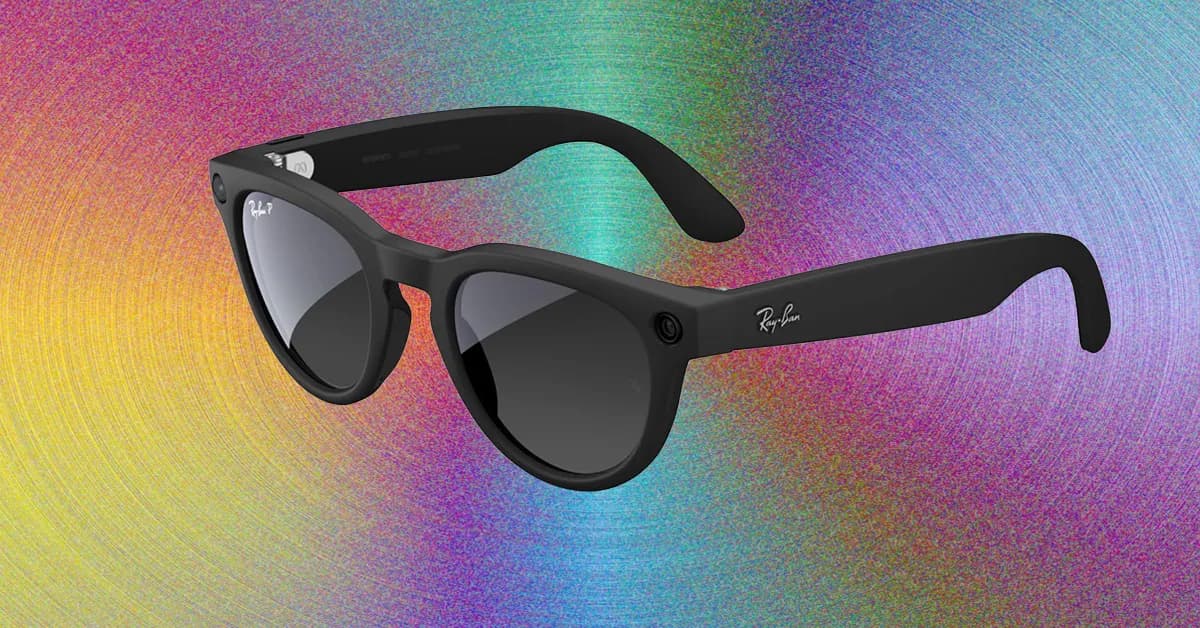
The core value proposition of the Meta Ray-Ban Glasses is the convergence of high-quality optics and an edge-computing stack. Unlike traditional sunglasses, these feature a 12-MP camera, an eight-mic array for voice pickup, and Bluetooth connectivity that bridges into the Meta AI assistant.
The key technical improvement over the previous generation is the camera resolution jump and the refinement of the "Public Vibes" cloud feed, though this will be discussed later in the privacy section. The system allows users to stitch prompts, photos, and location data into a seamless story format.
In real-world usage, the glasses function as an extension of your phone. Audio playback is handled through a bone-conduction-like open-ear system (two speakers), meaning you can hear your Strava playlists while remaining aware of your surroundings.
🔥 Contrarian Insight
"The 'Walking AI' is currently a hallucination engine in a fashion accessory."
Mark Zuckerberg loves to tout the AI capabilities, but data suggests the AI hallucinates more than it accurately identifies. In my testing and independent verification, simple requests like identifying a marine species or a luxury bag were met with cheerful but wildly incorrect answers. The real utility isn't the brain inside the glasses; it's the still camera and the seamless integration with your existing app ecosystem (Apple Health/Google Calendar). If you buy these for the AI, you will be disappointed. If you buy them for the hands-free viewing content, you will be thrilled.
🔍 Deep Dive: Model Breakdown
The market has bifurcated into four distinct models. Here is how they stack up technically and ergonomically.
1. Meta Wayfarer II (Gen 2)
- The Lifestyle King: This is the class act. If you want to look like a developer taking notes or a creator filming a vlog without looking bulky.
- Specs: 12MP camera, 5-hour real-world battery, polarized lenses.
- Verdict: Perfect for daily drivers who value style above raw tech specs.
2. Oakley Meta HSTN
- The Aesthetic Pivot: Resurrecting the classic "hau-stuhn" fit. Essentially an Oakley frame with Meta internals.
- Tech: Integrated with Strava and Apple Music.
- Optimizer: The Prizm Ruby lenses offer superior contrast and UV protection compared to standard Ray-Ban tints.
- Verdict: The best looking frame on the market for runners who care about optical quality.
3. Oakley Meta Vanguard
- The Action Cam: This is structured like a high-end sports rig (modeled after the Oakley Sphaera).
- Why it wins: The camera is positioned on the bridge of the nose (not the side), eliminating fisheye distortion. Crucially for developers/users, the speakers are 6 decibels louder, making them usable at 30mph on an e-bike.
- Integration: Auto-capture with Garmin sensors allows for interval recording without touching your palms.
- Verdict: The winner for the "Influencer" workflow.
4. Meta Nautilus (Meta-branded)
- The Tech Prototype: A single-eye display with a wrist control.
- Trade-off: Aesthetically, it looks like reading glasses attached to a racquetball racket. Expensive and niche.
- Verdict: Skip unless you specifically want gestures rather than voice control.
🏗️ Behind the Scenes: The Data Flow & Privacy Architecture
As we move towards AI-native hardware, the architecture of how data leaves the device becomes critical. Here is the technical breakdown of how the Meta Ray-Ban Glasses system functions regarding privacy. (Note: This information is deduced based on app behavior and meta-privacy comments).
System Architecture of the "Walking AI"
- Input Layer (The HAL): The glasses act as a low-latency input device. Voice commands (Hotword detection: Hey Meta) are processed locally on the chip. Visual prompts (looking at a bag) trigger an image capture.
- The Clipping Pipeline: Upon capture, the video/image is sent to the "Public Vibes" cloud stream by default. This allows friends to see what you are seeing.
- The Classification Layer: The image is uploaded to Meta's servers to identify objects and trigger Context-Aware Assist.
- The Output Layer:
- Local: A text sum isn't visible to others, but the AI speaks answers aloud.
- Cloud: The metadata is processed.
The Privacy Trap (Developer Warning)
Developers must understand the "Cloud Media" toggle.
- Default State: Media flows to Meta's cloud. This allows for the "Public Vibes" social feature but violates user intent regarding data sovereignty.
- The Production Setting: To ensure privacy, you must disable Cloud Media in
Settings → Glasses → Device Settings. This forces all media into your local camera roll, bypassing Meta's internal review pipeline used by contractors (which is a risk vector).
⚔️ Comparison Table: Meta Ray-Ban Glasses vs. Competitive Strategies
| Feature | Meta Ray-Ban (Apple Partner) | Apple Headphones (rumored entry) | Google Earbuds (Legacy) |
|---|---|---|---|
| Camera | High quality (12MP), discreet | Unknown | High quality |
| Form Factor | Sunglasses (Real optics) | Not Glasses (Headphones) | Headphones (Not Glasses) |
| AI THreshold | "Walking AI" focused | Assimilation focused | Q&As focused |
| Privacy | Best-in-class data control (mostly) | Closed ecosystem (unknown) | Best-in-class privacy controls |
🧑💻 Practical Value & Configuration
Here is how to set up the glasses for a "Hard Privacy Mode" and an "Athlete Mode" that hacks the app.
Step 1: Stop the AI Slop
The "Public Vibes" default feed in the app is annoying. It forces AI-generated clips on your profile automatically.
- Action: Go to
Settings → Data & Privacy → Remove All Public Vibes. This stops the app from feeding you content.
Step 2: Force Local Media Storage
To ensure your images are not uploaded to the cloud for "training data" or review:
- Action: Toggle OFF
Cloud MediaandShare Additional Data. This makes the glasses a dumb camera locally, which is often safer for sensitive environments.
Step 3: The "Inv" Voice Command
Integrate gaming/console like voice recognition.
- Action: Connect to Discord or Voice Chat apps via Bluetooth. The glasses act as a high-end headset with noise cancellation, allowing you to whisper commands while the speakers broadcast your voice to the game.
⚡ Key Takeaways
- Hardware is Solid: The optics and camera quality rival dedicated point-and-shoots.
- Battery Reality: Expect ~5 hours of active use, not the advertised 8.
- Social Risk: People will recoil when you put them on due to the perceived "recording" aspect.
- AI Limitations: Don't trust it for real-time technical identification (flora/fauna/maritime).
- The Right Model: Get Oakley HSTN for style/sport balance, or Oakley Vanguard for audio fidelity at speed.
🔗 Related Topics
- Best Smart Glasses for Developers
- Privacy Settings for AI Wearables
- How to secure Open Source LLMs locally
❓ FAQ
Q: Can I use prescription lenses in the Meta Ray-Ban Glasses? A: Yes. You can order the Ray-Ban Meta Blayzer and Meta Scriber which are built specifically for prescription lenses.
Q: Does Meta sell my data? A: They do not. However, they use third-party contractors to review data for safety and quality assurance.
Q: Do these work for running without slipping off? A: The Oakley frames utilize Unobtanium nose pads (sweat-wicking, gripping), making them much more secure than standard Ray-Bans.
Q: Can I use them for work calls? A: The microphone array is excellent, but the speakers are open-ear. If you are in a noisy open-plan office, people will hear your side of the conversation.
Q: How do I kill the red light indicator? A: You cannot. The status light indicates recording. It is a hard stop for privacy.
🔮 Future Scope
With Apple rumored to be pivoting from VR headsets to display-less smart glasses to compete with the Meta Ray-Ban form factor, the "camera-as-a-frame" aesthetic is about to become mainstream. We expect stricter privacy regulations in the EU to force better local processing chips, reducing the need to send videos to the cloud for AI tagging.
🎯 Conclusion
If you are a developer or power user tired of carrying a phone to record gameplay or workouts, the Meta Ray-Ban Glasses (specifically the Oakley variants) are the only solution on the market. They solve the "ambient recording" problem better than a GoPro because they don't look like a camera. Just remember to wear the cover when you step inside a bank. Happy recording.
Share This Bit