AppleMac Mini
Mac Mini Price Hike & Supply Shortage: Why You Can't Find One Right Now
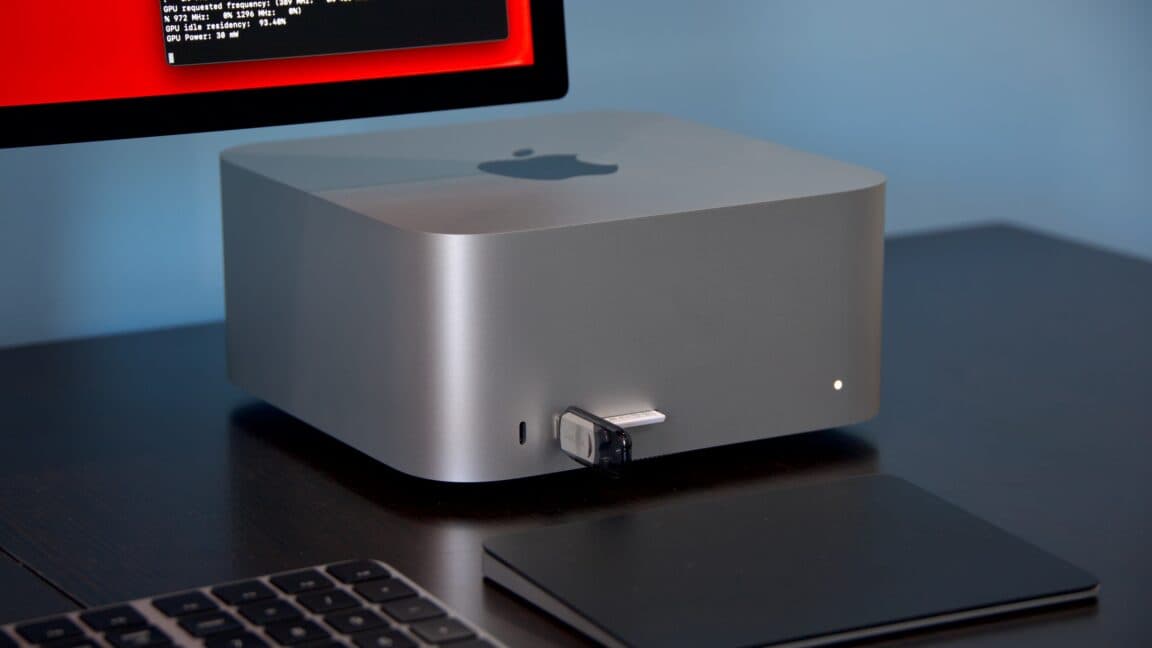
- The Mac mini price hike is real: the cheapest Mac mini now starts at $799.
- Apple officially discontinued the $599 model, which previously offered 8GB of RAM and 256GB storage.
- Supply constraints are driving this change, specifically due to high demand from developers running local AI agents.
- New orders for the M4 Mac mini face 5–6 week shipping delays.
- Cook confirmed it will take several months to reach supply-demand balance due to "advanced manufacturing nodes."
🎯 Introduction
Apple has officially confirmed the Mac mini price hike that many developers feared, but the financial impact is only half the story. The $599 entry-level Mac mini has been removed from the Apple Store, meaning the cheapest way to get an M4 processor desktop now costs $799 (16GB RAM, 512GB Storage).
This isn't just a price adjustment; it is a symptom of a strained supply chain where artificial intelligence demand is exceeding capacity. For developers planning to deploy AI agents locally or heavy compute workloads, Apple's desktop lineup is currently facing the biggest bottleneck since the transition to Apple Silicon.
🧠 Core Explanation
The situation involves two critical factors: a strategic hardware refresh and a reactive supply chain failure.
1. The Discontinuation of the "Economy" Tier The old $599 Mac mini provided 8GB of RAM and 256GB of storage. The new $799 entry point doubles both. While this seems like a Mac mini price hike on paper, storage-wise, you aren't paying extra for space—you are paying for the M4 Chip that requires the extra headroom.
2. The AI Arms Race During Apple’s Q2 earnings call, CEO Tim Cook stated that both the Mac mini and Mac Studio are "amazing platforms for AI," with demand outpacing forecasts.
"The customer recognition of that [running AI agents locally] is happening faster than what we had predicted."
Apple is essentially prioritizing the production of the chips that can actually run modern AI workloads (high-bandwidth memory requirements), leaving the less performant SKU (the old $599 box) on the chopping block.
🔥 Contrarian Insight
Here is the uncomfortable truth for the developer community: Apple is intentionally throttling the "budget dev kit" segment to force a hardware upgrade.
For years, the Mac mini served as the "poor man's workhorse." It was the affordable entry point for developers to mine open-source models and prototype locally. By discontinuing the low-RAM configurations and halting production, Apple is leveraging supply chain bottlenecks to force users into the $799+ Mac Studio territory. If you want to run modern LLMs (Large Language Models) locally on a Mac today, the old economy strategy is dead. Apple has signaled that the Mac mini is no longer a commodity; it is now a dedicated AI workstation.
🔍 Deep Dive: Supply Chain & Chip Constraints
The root cause of the Mac mini shortage isn't just popularity—it is fab capacity. Tim Cook addressed the SoC supply issue directly:
"Availability of the advanced [manufacturing] nodes our SoCs are produced on was constrained, and we have less flexibility in the supply chain than we normally would."
The TSMC Bottleneck
Apple relies on TSMC for its chip manufacturing. The M4 and M4 Pro chips utilize advanced semiconductor nodes (3-nanometer class). These nodes are currently the industry bottleneck, used heavily for high-end iPhones and the Mac Studio. When TSMC is at max capacity for foundry clients like NVIDIA and Intel, orders from Apple for M-series chips have to wait.
Milliseconds Matter for AI
The "Advanced nodes" Cook mentions are crucial for AI. They provide the Neural Engine bandwidth and unified memory bandwidth required for tasks like generative AI. Apple is essentially rationing the chips that provide the necessary hardware acceleration for AI, which explains why the 256GB (non-512GB) models—likely using less optimized DDR5 or memory configurations—have been cut entirely from the lineup.
🧑💻 Practical Value: What Developers Should Do Now
If you need a machine now, the current state of affairs requires a strategy change.
1. Stop Waiting for Stock The official Apple Store is listing new orders for the $799 Mac mini with a 5–6 week shipping delay. Asking for a "Launch Day" machine this year was unrealistic given the global AI investment boom.
2. The $799 Decision Matrix Pros:
- True AI Ready: 16GB of unified memory is the absolute floor for running modern open-source models (like Llama 3 or Mistral) locally without extreme quantization.
- Form Factor: It's the cheapest Apple workstation that fits in a laptop bag.
Cons:
- Still Limited: 16GB is tight for multiple simultaneous agents.
- No Flexibility: You can't custom-order the RAM; 32GB+ starts at $1,599 (Mac Studio).
3. Alternative Platforms If the Mac mini shortage and the Mac mini price hike are dealbreakers, look at:
- Generic PC Builds: High-end consumer PCs with PCIe-Gen5 NVMe or dedicated RAM for AI hardware (like GPU-accelerated inference) are often more cost-effective than buying into the Apple ecosystem right now.
- MacBook Air M3/M4: If you aren't doing heavy desktop compute, an Air is often more efficient and is currently more readily available.
⚔️ Comparison: Waiting for M5 vs. Buying Now
When is it worth waiting for the rumored M5 Mac mini in late 2024/early 2025?
| Factor | Buy current M4 (July 2024) | Wait for rumored M5 (Late 2024/2025) |
|---|---|---|
| Current Workload | Immediate availability of 16GB Unified RAM needed for basic LLM inference. | Will likely be efficient but starting price might increase again. |
| Price | $799 Entry / $1,599 for 32GB. | Unknown, but expect upwards of $799. |
| Supply | 5-6 weeks wait. | Variable (likely similar issues due to AI trends). |
| Verdict | Buy now if you have immediate hardware acceleration needs. | Wait if you are building from scratch in 6+ months. |
⚡ Key Takeaways
- The Mac mini price hike has shifted the starting price to $799, removing the $599 SKU entirely.
- The main driver is not just memory manufacturing costs, but specifically demand for local AI agent hardware.
- Shipping times of 5–6 weeks indicate the shortage will persist through the rest of 2024.
- Apple CEO Tim Cook blamed constrained TSMC manufacturing nodes for the SoC shortages.
- The new base model offers 16GB RAM by default, a necessity for modern AI development.
🔗 Related Topics
- How to Run Local LLMs on Mac: The M4 Architecture Guide
- TSMC 3nm Supply Chain Analysis: Impact on Tech Giants
- Mac Studio vs. Mac Pro: Which is Actually Faster in 2024?
- Why Enterprise Developers are Switching to Apple Silicon
🔮 Future Scope
The M5 Era Industry reports suggest the M5 Mac mini is in the pipeline. It is highly probable that the pricing shifts caused by this shortage will solidify a new price floor—likely between $799 and $899—similar to where the laptop market started before the M1 refresh.
Memory Costs Cook noted that Apple expects "significantly higher memory costs" in Q3. For developers, this means if you decide to upgrade beyond the base 16GB model, the jump to 32GB will be painful price-wise. The $799 box becomes a temporary stepping stone.
❓ FAQ
Q: Why is the Mac mini out of stock everywhere? A: Demand for the M4 chip has surged because developers are running local AI agents and generative AI models. Apple has prioritized these high-end work over basic computing, and they are currently constrained by TSMC's 3nm production capacity.
Q: Is the $599 Mac mini back in stock? A: No. Apple removed it from the store. The new cheapest option is the M4 “High Performance” variant at $799, which features 16GB of RAM and 512GB of storage.
Q: Will the Mac mini price drop soon? A: Tim Cook stated it may take "several months" to balance supply and demand. Price drops are unlikely while inventory is scarce, but an M5 refresh later this year could force a price adjustment.
Q: Does the discontinued Mac mini support AI? A: That specific $599 model had 8GB of RAM, which is insufficient for modern local AI tasks. The new $799 model is the first "AFFORDABLE" Mac designed to run AI workloads.
Q: Is the Mac Studio shortage worse than the Mac mini? A: A top-end Mac Studio with 512GB of RAM was delisted entirely. Supply conditions are tight for all high-config Mac desktops due to the AI demand.
🎯 Conclusion
The Mac mini price hike is a loud signal: the era of the cheap compute node is over. Apple has throttled availability to manage demand for AI workloads, leaving developers with a 5-to-6-week wait or a price increase. If you are building the next generation of local AI agents, get in line for the $799 machine—it is the bare minimum required to compete in today's silicon reality.
Share This Bit