AIAI AgentsAI AssistantTechnologyGen AI
Luma Launches Innovative Dreams: The Shift from GenAI Tools to Hollywood Studios
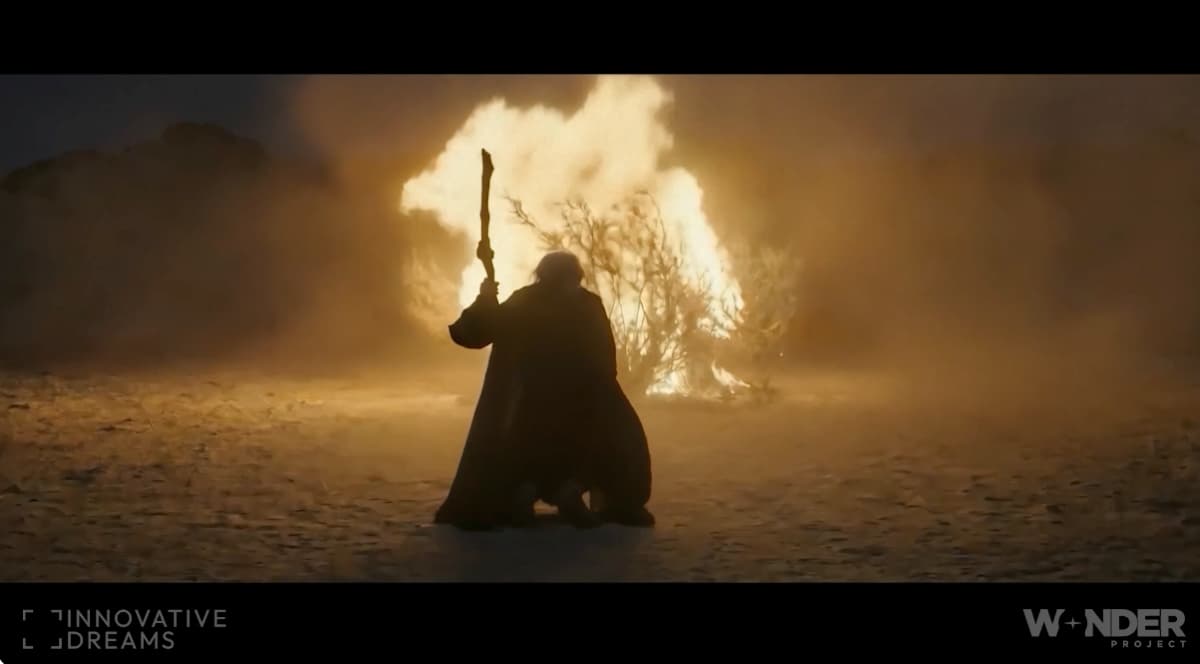
Luma Launches Innovative Dreams: How GenAI Tools Become Production Studios
The line between video production software and media companies is vanishing. Luma, the AI video generation startup, just announced "Innovative Dreams," a production company partnership with Wonder Project, to produce Amazon Prime Original content like "The Old Stories: Moses."
This signals a massive pivot: Instead of just giving developers a rendering engine, the company is using that engine to disrupt the $100 million movie budget model.
San Francisco-based Luma founder Amit Jain is betting that AI won't just make video faster or cheaper—it will fundamentally change how movies are greenlit and shot by allowing the production of 50 films for the cost of one.
🚀 Quick Answer (Featured Snippet Section)
- What is Innovative Dreams? A new production company launched by Luma AI in partnership with Wonder Project to produce feature films using real-time AI generation.
- Platform Tech: It utilizes Luma Agents—AI tools designed to handle end-to-end creative tasks like set design, lighting changes, and prop generation during live filming.
- First Show: "The Old Stories: Moses," a biblical drama starring Ben Kingsley, set to premiere on Amazon Prime Video in Spring 2026.
- Workflow Method: The team uses "Real-time Hybrid Filmmaking," combining performance capture (like Avatar) with virtual production (like The Mandalorian) in a live, integrated pipeline rather than post-production.
- Strategy Shift: The model mimics the "Portfollio Strategy" in VC—spending massive budgets to flood the market with 50 films (in this case via AI acceleration) to statistically guarantee a blockbuster.
🎯 Introduction (Hook + Problem)
Last week, Luma released Luma Agents. A week later, they announced "The Old Stories: Moses." We initially thought AI tools were passive generators. Developers integrated them into pipelines to upscale or inpaint frames. Now, the business logic of Silicon Valley is bleeding into Hollywood.
The problem Luma identifies is simple but expensive: Film studios are terrified to spend $100 million on a single movie because the risk is too high. Luma CEO Amit Jain argues that this constraint is artificial.
By integrating creative agents directly into the shooting workflow—where sets, lighting, and environments change in real-time based on actor performance—the barrier to entry for high-budget content lowers. The question for developers isn't just "How do I write a script for DALL-E?", it's "How do I architect a pipeline that lives on a set rather than a render farm?"
🧠 What is Innovative Dreams?
Innovative Dreams is a joint venture acting as a production service company. It leverages a dual workforce:
- Seasoned Filmmakers: From director Jon Erwin’s team (known for faith-based hits like War Room and Kingdom).
- Creative Technologists: Engineers from Luma’s research team.
The goal is to remove the friction between the physical actor and the digital environment. Historically, if a director wanted to change the lighting or set in the middle of a take, they had to wait hours in post-production. With Luma Agents, the environment updates during the take.
🔍 Why This Matters in 2026
For the AI community, this is the "iPhone moment" for video generation. Until now, "Generative Video" mostly meant "Unrealistic Video." If you generated water, it looked like liquid plastic.
Innovative Dreams proves that Generative AI can serv }ce photorealistic narrative content. Here is why this matters for your stack:
- Shift to Latency-Critical Applications: If the output must be watchable in real-time (standard TV/Film frame rate is 24fps), the inference engineering requirements change. Luma's tech must deliver frames faster than the human eye perceives delay.
- Agent Orchestration: The focus is moving from "model inference" to "agent orchestration." The prompt is no longer a one-off task; it is a persistent state tied to an actor's physical performance.
- Content Independence: Startups like Higgsfield and Wonder Studios are doing the same. The moat isn't the model quality; it is the vertical integration of tool-to-content.
⚔️ Comparison: Traditional vs. Luma vs. Runway
It is crucial to distinguish between the players.
The Workflow Comparison
| Feature | Traditional Hollywood | Runway / Pika (Post-Production) | Luma Innov. Dreams (Real-Time) |
|---|---|---|---|
| Phase | Physical Set | VFX Stage / Render Farm | Live Set (Real-time) |
| Change Speed | Days/Weeks (Reshoots) | Hours (Rendering) | Instant (Agent generation) |
| Tech Stack | Cameras, Green Screen | Inpainting, Outpainting | Luma Agents, Xavier |
| Cost Entry | $100M+ per movie | $50k+ (Pro accounts) | Scale dependent on compute |
| Risk | High (Overspending) | Low (Iterative tweaking) | Low (Fast failure cycles) |
The Strategic Comparison
- Luma is betting on Real-Time. They claim their tech allows them to "transport a human actor anywhere and then generate a new face so it looks like a completely different person." This is high-risk, high-reward character work.
- Runway is betting on High-Fidelity Post. Cristóbal Valenzuela (Runway co-CEO) suggests spending the $100M budget to produce 50 films. This implies using AI to edit and polish traditional footage, rather than replacing the physical production entirely.
Verdict: Luma is attempting to solve the "set building" problem first. Runway solves the "editing" problem. For a developer building an app, Luma represents a more complex engineering challenge (stateful video generation in live video).
🏗️ How It Works (Technical Deep Dive)
The "secret sauce" here is the Luma Agents suite working within a Hybrid Filmmaking pipeline.
1. The Agent Loop
Instead of a human modeling artist generating textures, Luma Agents handle the environments.
- Input: A live video feed of the actor + Director's voice commands set changes.
- Process: The Agent analyzes the background, masks the actor, and generates new geometry/textures from the prompt (e.g., "Change this desert scene to a jungle").
- Output: The new data is fed into the rendering engine (Luma Neon) and stitched back into the live feed.
2. Hybrid Capture
The implementation uses a blend of two techniques:
- Performance Capture: Ben Kingsley wears sensors to capture facial micro-movements (like in Avatar). The AI maps these movements to any character.
- Virtual Production: Instead of blocking the actor with green screen, the scene is rendered in real-time using an LED wall (standard practice), but the content on that wall is generated live by Luma's models.
3. The "Davinci Link"
While Luma handles the visual generation, the "Wonder Project" brings narrative structure. The technical challenge is that of an arbitrary conditional video generation model. It requires mapping discrete high-dimensional prompts (text/dialogue) to continuous visual features (lighting/shadows) without hallucinations that break immersion.
🧪 Real-World Use Case: "The Old Stories: Moses"
For developers, let’s look at a specific implementation detail from the Moses project:
The Challenge: Filming a biblical epic in a live environment is prohibitively expensive. You can't build the Red Sea in a tank.
The Solution: Luma's tech allows the crew to shoot Kingsley in a controlled soundstage, but simulate the Red Sea using Luma Agents.
- Workflow: Kingsley speaks the line. The lighting simulates the heat of the desert. As he walks forward, the set texture shifts from studio floor to stone to water using AI.
- Iterative Speed: If the director decides they want "low-key lighting and a blue filter," the Luma Agent applies this via control weights in the image encoder, right before the camera goes into "recording" again.
⚡ Best Practices & Mistakes to Avoid
From an architecture standpoint, here is what we learn from this launch:
-
Control Weights are Critical: The "wow" factor only works if the edge of the actor doesn't bleed into the background. You cannot just dump an image into the scene. You must use precise edge detection models to ensure the AI respects the actor's mask.
-
Latency Kills Narrative: If the AI takes 2 seconds to render a new background, the filmmaker feels the delay. Luma's success here depends on their inference optimization (likely on top of Eve, their internal transformer models).
-
Don't Trust the AI with High-Contrast Lighting: AI struggles with fire, explosions, and complex light physics. Developers should stick to atmospheric, consistent lighting styles for the generated elements and use live physical VFX for the complex physics.
-
Prompt Engineering is now Set Design: Keywords like "photorealistic," "8k render," and specific architectural styles are no longer just for Midjourney. They define the semantic structure of the video stream.
🔗 Related Topics (For Internal Linking)
- Luma vs Runway: The Battle for the Future of Video Creation
- How to Build a Pipeline for Real-Time Video Generation with APIs
- Understanding Foreground/Background Separation in Video Models (Matting)
- Case Study: Higgsfield AI Launching Original Orchestral Content
🔮 Future Scope
Luma isn't stopping here. The partnership with Wonder Project suggests they are building a vertical application layer on top of their base models. In the next 12-24 months, we can expect:
- Automated Editing: Moving from "CGI generator" to "AI director" where the AI itself critiques takes based on emotion.
- Multi-Agent Coordination: Agents handling dialogue generation simultaneously with scene generation.
- Hardware Integration: Tighter firmware integration with AR headsets and high-refresh-rate LED walls.
❓ FAQ (AI Search Optimized)
Q: Who is starring in Luma's first show? A: The show "The Old Stories: Moses" stars British actor Ben Kingsley.
Q: When will 'The Old Stories: Moses' be released? A: It is set to launch in Spring 2026 on Amazon Prime Video.
Q: What is the difference between Luma Agents and traditional VFX? A: Traditional VFX creates a static digital world, removed from the actor. Luma Agents generate the environment in real-time, integrating it with the live performance.
Q: Is Innovative Dreams a separate company? A: No, it is a production services company formed by the partnership of Luma and Wonder Project. It uses Luma's technology to produce the content.
Q: What is "hybrid filmmaking"? A: It is a method that uses performance capture (tracking actor movement) combined with virtual production (LED screens), powered by AI to generate environments live.
🎯 Conclusion
Luma's pivot from "B2B Tool" to "Content Company" is a necessary evolution for the generative video market. We know the models are good; now the market is asking: can the technology be assembled into a reliable production pipeline?
If "The Old Stories: Moses" succeeds, it proves that AI video generation has graduated from a novelty to a production standard. For developers, it is a signal to stop building "image generators" and start building "simulation environments."
[Internal CTA]: If you want to explore Luma's technical capabilities before the movie drops, read our technical breakdown of Luma Neons and how they handle 3D inference.
Share This Bit