GadgetsLenovo
Lenovo Legion Go S Price Hike: RAMageddon Hits Handheld Gaming Hard
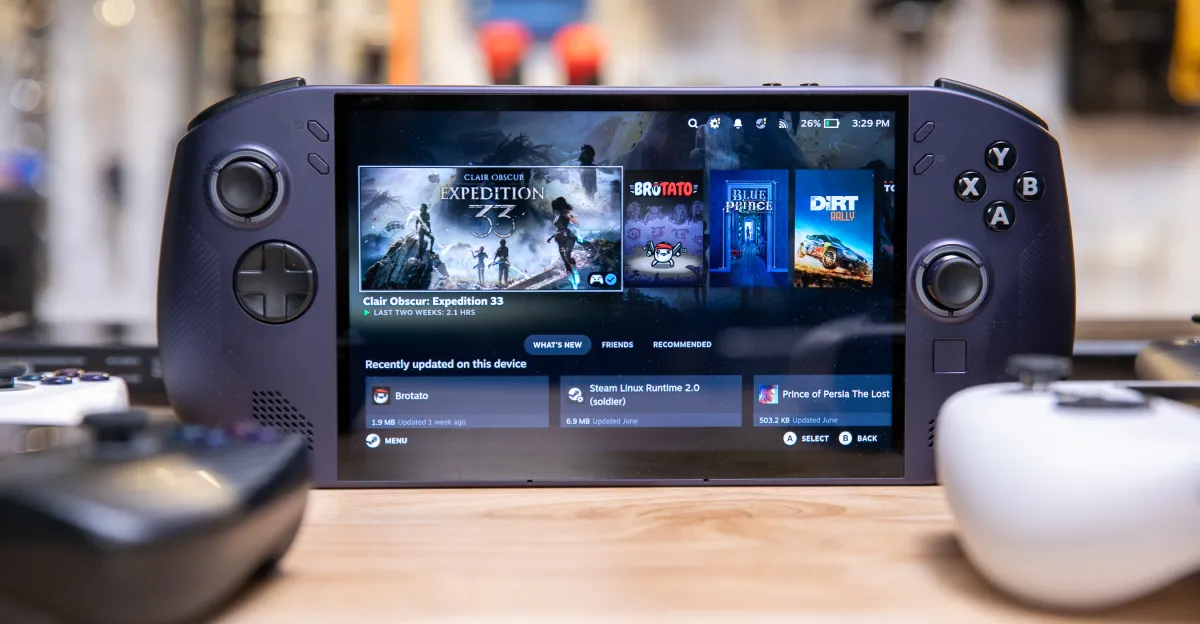
🚀 Quick Answer
- Major Price Surge: The SteamOS version of the Lenovo Legion Go S increased from $829.99 to a staggering $1,579.99 at Best Buy.
- Global Cause: The sudden hike is directly linked to the "RAMageddon" global memory shortage affecting hardware production.
- Competitor Stability: While the Legion Go S prices out, the Asus Xbox Ally X still sits at $999, and the MSI Claw 8 AI Plus is $1,049.
- Stock Volatility: Lenovo is quietly delisting specific SKUs, referring to the device as "Gen 1," suggesting a refresh is incoming.
🎯 Introduction
The Lenovo Legion Go S price hike isn't just annoying; it’s a wake-up call for the portable gaming market. Unless you’ve been living under a rock, you know the global hardware industry is currently battling a severe memory shortage tied to the collapse of the DRAM market. We are seeing "RAMageddon" everywhere, but nowhere is it more painful than in the PC handheld sector. What was once the best 8-inch Windows handheld available has seemingly given up the fight against inflation, with the best SteamOS version now nearly doubling in price overnight.
If you are looking to start a portable gaming lineage, you need to understand the current landscape. Prices are unreliable, availability is thin, and the cost of entry has reset significantly. Let's break down exactly where the prices landed and why you should be cautious about pulling the trigger right now.
🧠 Core Explanation
According to recent inventory checks, the flagship SteamOS model of the Lenovo Legion Go S has caused quite a stir. While competitors like the Asus Xbox Ally X and MSI Claw 8 AI Plus have maintained their pricing integrity near the $999–$1,049 range, Lenovo has taken a different route.
At Best Buy specifically, the SteamOS version powered by the Z1 Extreme chip—originally launched for a reasonable $829.99 last summer—is now listed at $1,579.99.
This is a $750 jump. It’s not a discount; it’s a delisting event. The issue isn't just with the high-end models. The entry-level Z2 Go model has also experienced a massive surge, jumping from $599.99 to nearly $1,000 depending on the retailer.
🔍 What's Happening Under the Hood?
The core issue is the ongoing oversupply of DRAM chips. Manufacturers are struggling to meet demand with stable pricing, which usually leads to stock clearing. In this case, it has led to aggressive price manipulation by retailers like Best Buy and incumbency tactics by Lenovo. Several listings across Amazon and Lenovo’s own site have vanished entirely, with the product page now referring to the device only as the "Lenovo Legion Go S Gen 1."
The Reality Check: This isn't a "special offer" or a "sale." This is an inventory correction where the cheapest units are disappearing from the market, leaving the US bucket with inflated pricing on remaining units.
🔥 Contrarian Insight
Stop pretending Lenovo is innocent here.
While we love to scapegoat "memchip shortages," large corporations rarely suffer margin compression in a supply crunch—they simply pass the cost to the consumer. This isn't a story of a developer struggling to build a device on a shoestring budget; it is a profit-margin preservation strategy disguised as a market adjustment.
Furthermore, there is an aggressive, barely disguised attempt to tether buyers to the "Windows" ecosystem. You might notice the heavily criticized Windows Store is hyper-prominent in the refresh, possibly to push users toward a specific digital ecosystem rather than just buying the hardware for its utility. Don't fall for the "Gen 2" label they are rolling out—consumers lose here, shareholders win.
🔍 Market Impact & Competitor Analysis
The Lenovo Legion Go S price hike is part of a larger trend, but it sets a grim precedent. Other flagship consoles have hiked prices too, but the PC handheld market was the only place offering viable competition to the Steam Deck.
Why This Matters for You
- The "Steam Deck" Barrier: We are entering a period where high-end PC handhelds are priced almost like mid-tier laptops.
- Segregation of Ecosystems: If you want the quickest, most efficient Z1 Extreme experience (SteamOS), you are paying a premium. If you settle for the Windows version, you get a better price but a worse software experience.
- The "Wait" Game: Lenovo's website is already pivoting to "Gen 1," implying a refresh means a chance for price stabilization later.
🏗️ Industry Supply Chain Shifts (The Technical Perspective)
From a systems perspective, the input-to-output ratio of these handhelds has been decoupled due to horizontal scaling issues in the memory production sector. When RAM (DRAM) unit costs spike, the "Bill of Materials" (BOM) for the handheld increases disproportionately to the value-add of the device.
- Input: Elevated DRAM wafer pricing.
- Process: OEMs (Original Equipment Manufacturers) face a choice:
- Decrease yield quality (rare in high-end gaming gear).
- Increase retail unit price.
- Downgrade component specs (not happening here).
- Output: The consumer sees Option 2.
This creates a feedback loop where early adopters who paid launch prices get wrecked by "lifecycle depreciation," while late adopters face "market inflation."
🧑💻 Practical Value: What Should You Do?
If you are in the market for a portable gaming PC, here is the actionable advice based on current market data:
- Skip the SteamOS Gen 1: The price jump from ~$830 to ~$1,500 on the SteamOS Z1 Extreme model makes it statistically a terrible investment right now. You are paying a massive premium for open-source accessibility in a price war scenario.
- Target the Windows Version: The Windows Z1 Extreme is currently on "sale" around $1,049 at major retailers. While it doesn't have the performance efficiency of SteamOS, it is roughly 50% of the cost increase of the SteamOS version.
- Consider the Competition: If price is your primary concern, the Asus Xbox Ally X (approx $999) still holds the value crown. It offers better battery efficiency and comparable raw power without the price gouging seen on the specific Legion Go S SKUs.
⚔️ Related Topics
- The Ultimate Comparison: Steam Deck OLED vs. Steam Deck LCD
- Asus Xbox Ally X Review: Is It Worth The Hype?
- Why Graphics Cards Are Still Expensive: The Supply Chain Deconstructed
⚡ Key Takeaways
- The Lenovo Legion Go S SteamOS version price nearly doubled, jumping to ~$1,580.
- This price hike is a direct result of "RAMageddon" and isn't expected to reverse soon.
- Competitors like the MSI Claw 8 AI Plus and Xbox Ally X are currently better value propositions ($999-$1049 range).
- Lenovo is delisting the original listing, referencing it as "Gen 1," indicating a refresh is likely on the way.
❓ FAQ
Why did the Legion Go S price skyrocket? The price increase is driven by the global DRAM memory shortage. As chip costs rise, Lenovo and retailers are passing those costs directly to consumers to maintain their profit margins.
Is there a "Gen 2" coming soon? Yes. Reddit sleuths and description snippets on Lenovo's site suggest the firm is aggressively rebranding the current model as "Lenovo Legion Go S Gen 1," implying a refresh is inevitable to either fix pricing or specs.
Should I buy the SteamOS version at $1,500? In my experience, no. You are paying nearly double the launch price for a device that might get a full refresh in 6–12 months. It creates instant value loss.
Which handheld is the best value right now? The Asus Xbox Ally X at $999 remains the most stable financially. It hasn't seen the extreme price volatility of the Legion Go S or the MSRP creep of the Steam Deck OLED.
🔮 Future Scope
We are likely entering a "price normalization" phase for handhelds. As the global memory shortage pressures ease, manufacturers will need to lower prices to drive volume. However, tech press releases rarely show speed; they show patience. We should expect the Legion Go S inventory to thin out further before seeing any promotional recovery.
For developers, this means the "portable PC" market is viable but volatile. Ensure your product pricing strategy accounts for hardware supply chain volatility, not just software subscription services.
🎯 Conclusion
The Lenovo Legion Go S price hike is a stark reminder that the PC industry is not immune to global macroeconomic forces. While the Z1 Extreme chip is powerful, paying $1,579 for a tracking-stable handheld feels like a rip-off. Watch the stock levels on the Windows variant; if Lenovo can't move units at the higher price points, a correction is inevitable.
Share This Bit